
K2-18 b
K2-18 b orbits a cool red dwarf M-type star 124 light-years from Earth, measuring 2.4 × Earth in radius with a mass of 8.9 Earth masses. It completes its orbit every 32.9 days at 0.14 AU, comfortably within the habitable zone. Atmospheric studies reveal water vapor, methane, and possible biosignature hints. As a potential ocean […]
Ross 128 b
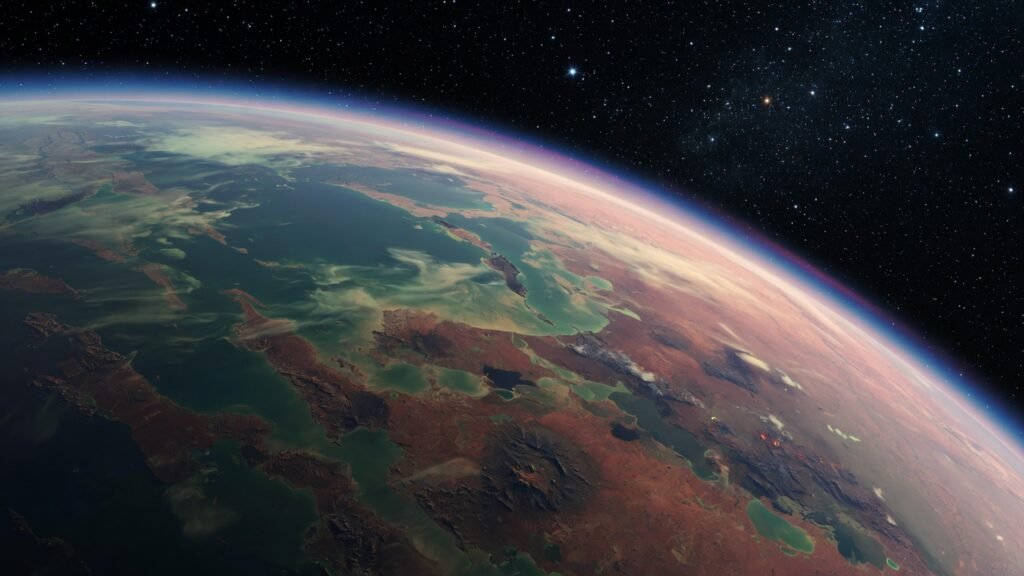
Ross 128 b circles a serene red dwarf M-type star just 11 light-years distant, with a radius of 1.4 × Earth and mass suggesting rocky composition. It orbits every 9.9 days at 0.049 AU, within the habitable zone where liquid water could persist. The host’s unusually low flare activity enhances atmospheric retention prospects compared to […]
Kepler-62 f
Kepler-62 f circles an orange dwarf K-type star 1200 light-years distant, with a radius of 1.4 × Earth. It completes an orbit every 267 days at 0.72 AU, residing in the habitable zone for liquid water possibilities. As part of a five-planet system, its rocky nature and temperate conditions make it a benchmark for Earth-like […]
TRAPPIST-1 e
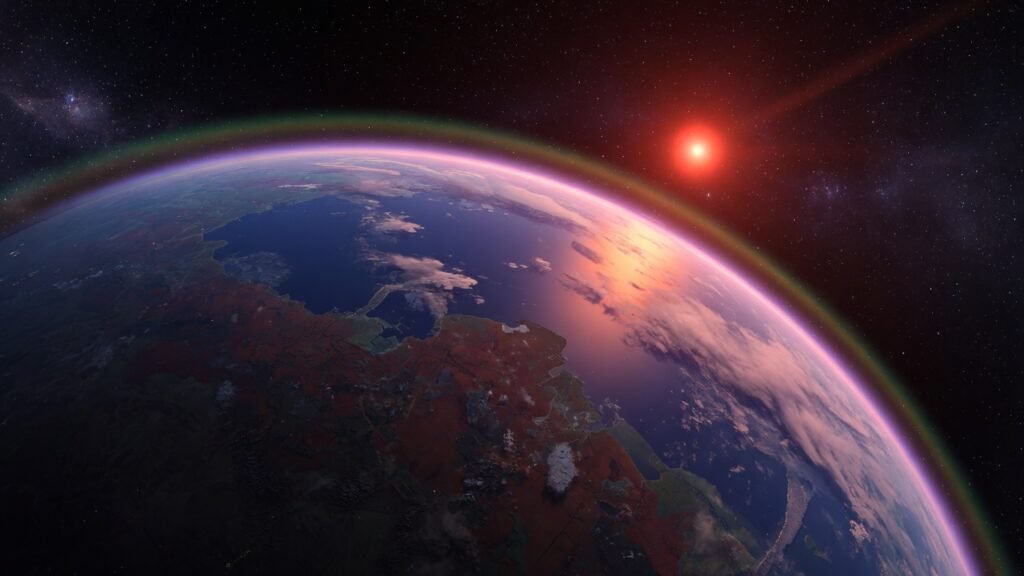
TRAPPIST-1 e is one of seven roughly Earth-sized planets orbiting an ultra-cool red dwarf M-type star 40 light-years from Earth. With a radius of 0.9 × Earth, it completes an orbit every 6.1 days at 0.029 AU in the habitable zone’s heart. Resonant orbits and low stellar flux support potential rocky surfaces with atmospheres and […]
Teegarden’s Star b
Teegarden’s Star b orbits one of the closest stars to Earth, a faint red dwarf M-type 12 light-years away. With a radius of 1.1 × Earth, it completes its orbit every 4.9 days at 0.025 AU, placing it firmly in the habitable zone. Its host star’s low activity minimizes atmospheric erosion risks, favoring potential surface […]
LHS 1140 b
LHS 1140 b circles a nearby red dwarf M-type star 49 light-years from Earth, with a radius of 1.7 × Earth and mass suggesting high density and possible volatiles. It orbits every 24.7 days at 0.095 AU within the habitable zone. Recent studies point to a possible ocean world composition. As one of the best-characterized […]
TOI-700 d
TOI-700 d is an Earth-sized rocky exoplanet revolving around a stable red dwarf M-type star 101 light-years distant. With a radius of 1.1 × Earth, it orbits every 37.4 days at 0.16 AU in the conservative habitable zone. Low stellar flare activity enhances habitability prospects compared with many M-dwarf systems. Its terrestrial composition and temperate […]
Proxima Centauri b
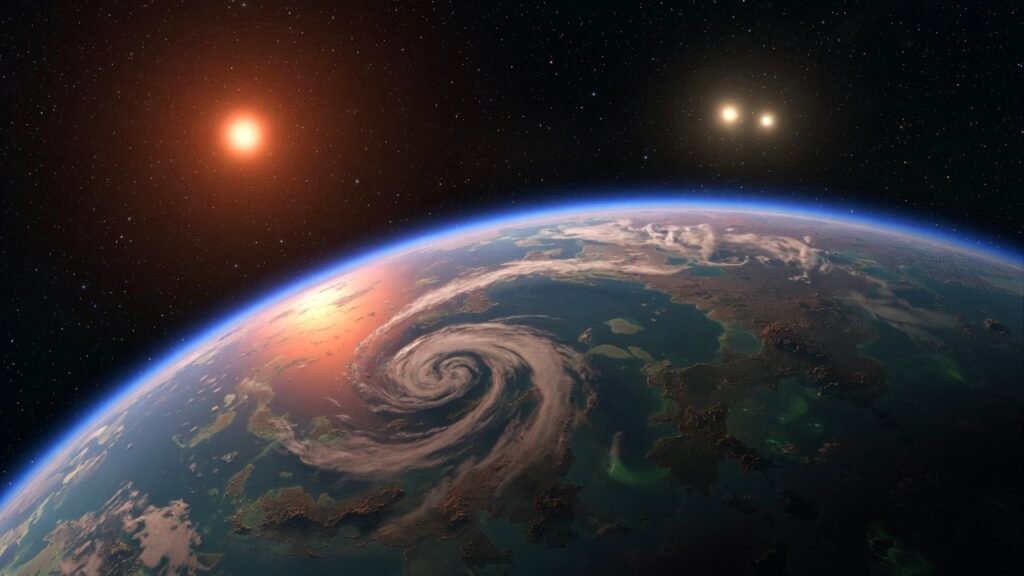
Proxima Centauri b orbits the nearest star to our Sun, a red dwarf M-type just 4 light-years away. With a radius of 1.0 × Earth, it circles every 11.2 days at 0.05 AU, squarely in the habitable zone where liquid water could exist given a suitable atmosphere. Tidal locking likely creates perpetual day and night […]
Kepler-452 b
Kepler-452 b revolves around a Sun-like G-type star 1800 light-years from Earth, with a radius of 1.6 × Earth. Orbiting every 385 days at 1.05 AU, it lies in the habitable zone of a star remarkably similar to our own. Its host’s age and stability suggest long-term potential for liquid water and life-friendly conditions. As […]
Kepler-186 f
Kepler-186 f orbits a red dwarf M-type star 500 light-years away, boasting a radius of 1.2 × Earth. It completes an orbit every 130 days at 0.43 AU, positioning it in the habitable zone’s outer reaches for potential surface liquid water. As the pioneering Earth-sized world confirmed in such a zone, it provides key insights […]