Earth-Sized Exoplanets

Our Cosmic Cousins

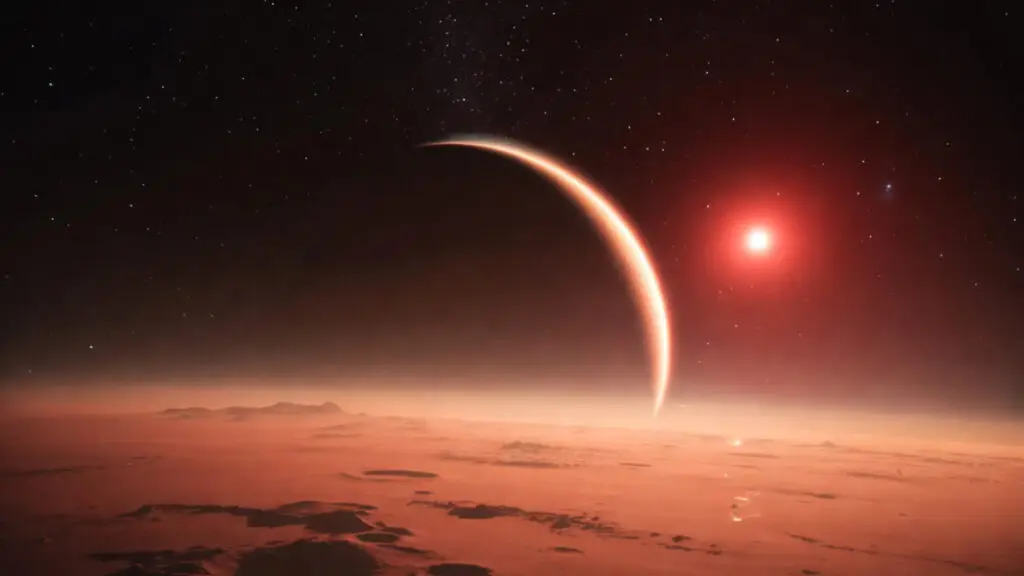
Earth-like exoplanets are the ones that get astronomers (and the rest of us) really excited. These rocky worlds are about the same size as our planet—give or take a little—and many orbit in the “Goldilocks zone” where it’s not too hot and not too cold for liquid water to exist on the surface. Water is the key ingredient for life as we know it, so these planets are our best bets for finding places that might have oceans, clouds, or even alien life one day.

Scientists have found hundreds of them using telescopes like Kepler, TESS, and the James Webb Space Telescope. Some orbit Sun-like stars, others circle cooler red dwarfs. A few are close enough that future missions could study their atmospheres for signs of biology. They’re not perfect twins—some might be tidally locked with one eternal day side, others could have thick greenhouse atmospheres—but they prove Earth isn’t unique. Out there in the Milky Way, there could be billions more just waiting to be discovered.

Earth-Sized Exoplanet Codex

Size:

1.1 × Earth

Distance from Earth:

41 light-years

Habitable Zone:

No

Star Type:

M-type

Fun Fact:

JWST took this world’s temperature and found it far too cool to be hiding a thick, Venus-style carbon dioxide sky!

Size:

0.9 × Earth

Distance from Earth:

40 light-years

Habitable Zone:

Maybe

Star Type:

M-type

Fun Fact:

This nearly Earth-sized world is one of the nearest temperate rocky planets found by TESS!

Size:

1.0 × Earth

Distance from Earth:

102 light-years

Habitable Zone:

Yes

Star Type:

M-type

Fun Fact:

This nearly Earth-sized world shares the habitable zone with its sibling TOI-700 d!

Size:

1.1 × Earth

Distance from Earth:

41 light-years

Habitable Zone:

No

Star Type:

M-type

Fun Fact:

JWST clocked its dayside near 500 K, matching bare rock better than a thick atmosphere!

Size:

0.8 × Earth

Distance from Earth:

40 light-years

Habitable Zone:

Maybe

Star Type:

M-type

Fun Fact:

This tiny rocky world sits on the inner edge of the habitable zone, getting just a little more sunlight than Earth!

Size:

2.8 × Earth

Distance from Earth:

28 light-years

Habitable Zone:

Maybe

Star Type:

M-type

Fun Fact:

This world circles a cool red star so closely that a year there lasts only about as long as a month on Earth!

Size:

1.3 × Earth

Distance from Earth:

25 light-years

Habitable Zone:

Yes

Star Type:

M-type

Fun Fact:

This super-Earth orbits a cool red dwarf star in a spot where liquid water could exist on its surface, making it a prime world to imagine with possible oceans and rocky shores.

Size:

1.4 × Earth

Distance from Earth:

440 light-years

Habitable Zone:

No

Star Type:

K-type

Fun Fact:

This compact super-Earth hugs its star in a super-fast orbit, making it a sizzling example of rocky endurance in tight cosmic quarters.

Size:

1.4 × Earth

Distance from Earth:

340 light-years light-years

Habitable Zone:

No

Star Type:

F-type

Fun Fact:

In this lively cosmic family, TOI-201 d zips around its star so closely that its days are packed with dramatic gravitational dances from its siblings.

Size:

1.1 × Earth

Distance from Earth:

89 light-years

Habitable Zone:

No

Star Type:

M-type

Fun Fact:

This tiny rocky planet dashes around its red dwarf star every 7 hours, so close that its surface glows like a fiery ember!

Size:

1.5 × Earth

Distance from Earth:

117 light-years

Habitable Zone:

No

Star Type:

K-type

Fun Fact:

This speedy little super-Earth zips around its star every 5 hours—faster than the blink of an eye—turning it into a blazing lava world!

Size:

1.1 × Earth

Distance from Earth:

89 light-years

Habitable Zone:

No

Star Type:

M-type

Fun Fact:

Racing its star in a blistering 0.3-day orbit, this rocky planet experiences a “year” shorter than one Earth day!