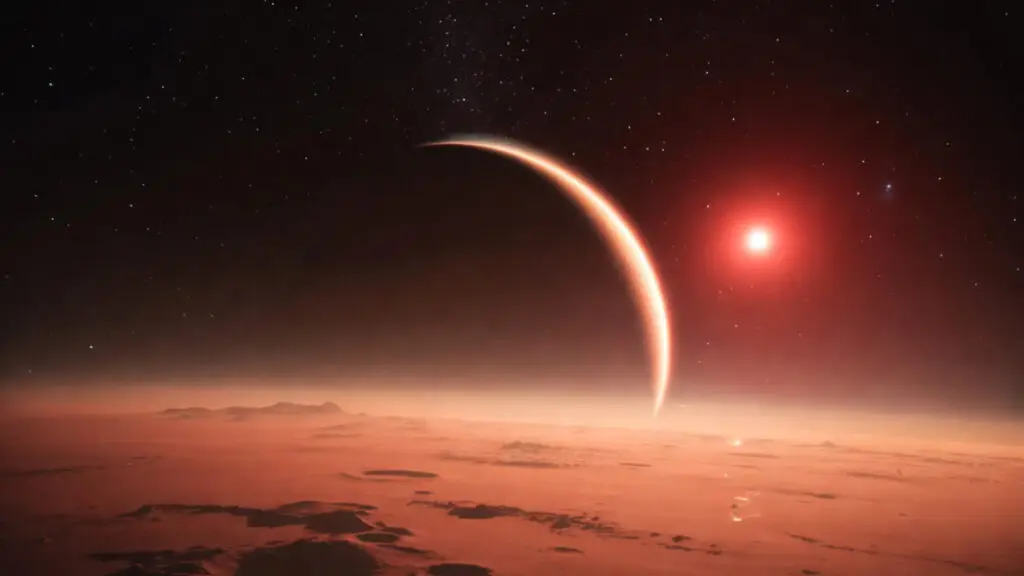
Earth-Sized Exoplanets

Our Cosmic Cousins

Earth-like exoplanets are the ones that get astronomers (and the rest of us) really excited. These rocky worlds are about the same size as our planet—give or take a little—and many orbit in the “Goldilocks zone” where it’s not too hot and not too cold for liquid water to exist on the surface. Water is the key ingredient for life as we know it, so these planets are our best bets for finding places that might have oceans, clouds, or even alien life one day.

Scientists have found hundreds of them using telescopes like Kepler, TESS, and the James Webb Space Telescope. Some orbit Sun-like stars, others circle cooler red dwarfs. A few are close enough that future missions could study their atmospheres for signs of biology. They’re not perfect twins—some might be tidally locked with one eternal day side, others could have thick greenhouse atmospheres—but they prove Earth isn’t unique. Out there in the Milky Way, there could be billions more just waiting to be discovered.

Earth-Sized Exoplanet Codex

Size:

1.2 × Earth

Distance from Earth:

83 light-years

Habitable Zone:

Yes

Star Type:

O-type

Fun Fact:

This Earth-sized planet zips around its cool red dwarf star once every four days, making for a very short year!

Size:

1.6 × Earth

Distance from Earth:

137 light-years

Habitable Zone:

Yes

Star Type:

M-type

Fun Fact:

A super-Earth in a red dwarf system, it might glow with auroras under its star’s gentle light!

Size:

1.1 × Earth

Distance from Earth:

40 light-years

Habitable Zone:

Yes

Star Type:

M-type

Fun Fact:

The outermost in its sibling group, this planet could boast a thick atmosphere perfect for trapping warmth!

Size:

1.0 × Earth

Distance from Earth:

40 light-years

Habitable Zone:

Yes

Star Type:

M-type

Fun Fact:

This rocky world in a family of seven might have deep oceans hidden under icy shells!

Size:

1.0 × Earth

Distance from Earth:

12 light-years

Habitable Zone:

Yes

Star Type:

M-type

Fun Fact:

A near-twin to Earth in size, this planet might circle its star with conditions just right for sparkling oceans!

Size:

1.9 × Earth

Distance from Earth:

163 light-years

Habitable Zone:

Maybe

Star Type:

M-type

Fun Fact:

This super-Earth sits right on the brink of its star’s habitable zone, where conditions might just allow sparkling oceans of liquid water on its surface!

Size:

1.2 × Earth

Distance from Earth:

92 light-years

Habitable Zone:

No

Star Type:

M-type

Fun Fact:

This compact Earth-sized world zips around its star so closely it might glow with intense heat!

Size:

1.1 × Earth

Distance from Earth:

72 light-years

Habitable Zone:

No

Star Type:

M-type

Fun Fact:

A near-Earth twin in a binary dance, this super-Earth might share its system with dramatic binary eclipses!

Size:

1.0 × Earth

Distance from Earth:

72 light-years

Habitable Zone:

No

Star Type:

M-type

Fun Fact:

This Earth-sized world orbits in a tight binary system, potentially witnessing double sunsets from its surface!

Size:

2.2 × Earth

Distance from Earth:

11 light-years

Habitable Zone:

Yes

Star Type:

M-type

Fun Fact:

This super-Earth orbits one of the closest quiet red dwarfs, potentially holding onto an atmosphere perfect for liquid water!

Size:

1.7 × Earth

Distance from Earth:

116 light-years

Habitable Zone:

Maybe

Star Type:

M-type

Fun Fact:

This dense super-Earth formed far from its star, defying usual rules with a rocky makeup in an outer orbit!

Size:

0.9 × Earth

Distance from Earth:

6 light-years

Habitable Zone:

No

Star Type:

M-type

Fun Fact:

Orbiting the speedy nearby Barnard’s Star, this tiny world races through a scorching close orbit!