
GJ 3378 b
TOI-715 b
TOI-715 b orbits a quiet red dwarf M-type star 137 light-years from Earth, sized 1.6 × Earth. With an orbital period of 19.3 days at 0.11 AU, it sits within the habitable zone, offering prospects for liquid water if an atmosphere persists. TESS transits confirmed its rocky or volatile makeup, making it a prime target […]
TRAPPIST-1 g
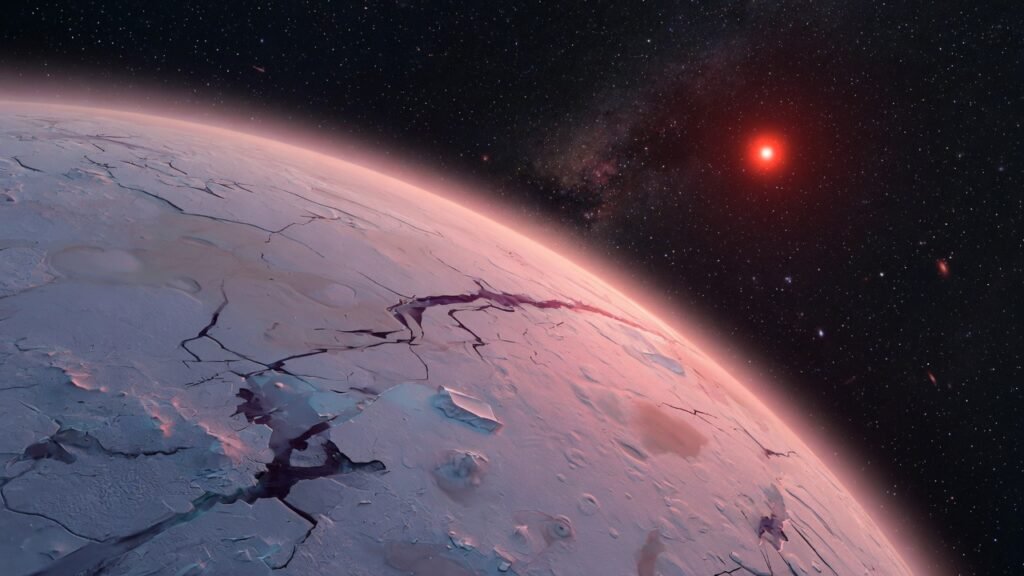
TRAPPIST-1 g is the farthest of seven Earth-sized planets around an ultra-cool red dwarf M-type star 40 light-years away. Measuring 1.1 × Earth in radius, it orbits every 12.4 days at 0.046 AU on the habitable zone’s outer edge. Possible volatile-rich composition hints at icy surfaces or subsurface oceans, with resonant dynamics aiding stability. As […]
TRAPPIST-1 f
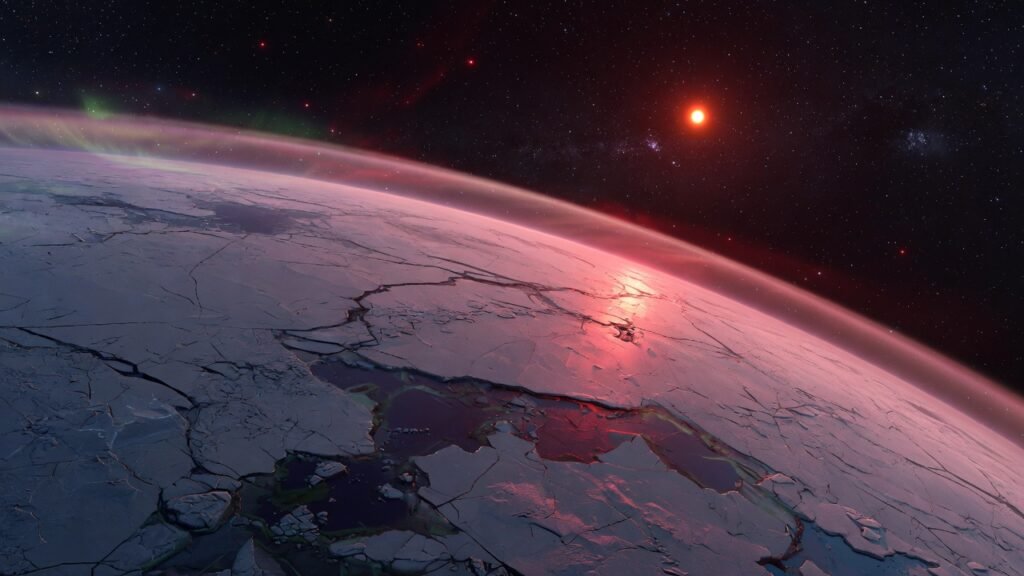
TRAPPIST-1 f orbits an ultra-cool red dwarf M-type star 40 light-years from Earth, as part of a resonant seven-planet system. With a radius of 1.0 × Earth, it circles every 9.2 days at 0.038 AU, placing it in the habitable zone where liquid water could exist beneath potential ice layers. Low stellar flux and tidal […]
Teegarden’s Star c
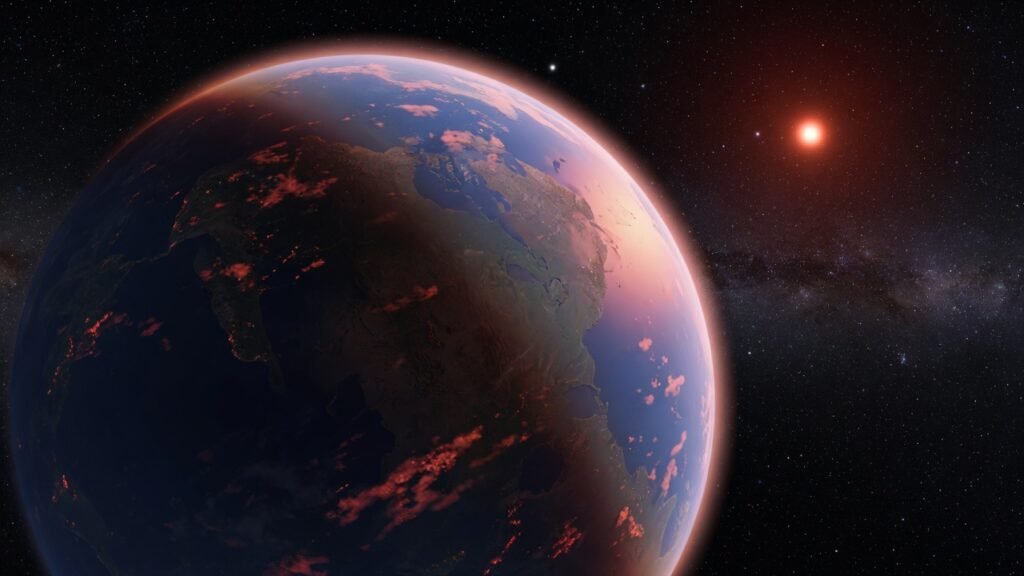
Teegarden’s Star c shares the same quiet red dwarf M-type host as its sibling, only 12 light-years from Earth. Measuring 1.0 × Earth in radius, it orbits every 11.4 days at 0.044 AU, residing in the outer habitable zone. The system’s proximity and the star’s stability make it ideal for future atmospheric probes. This Earth-analog […]
GJ 887 d
GJ 887 d orbits a bright, tranquil red dwarf M-type star just 11 light-years from Earth, one of the nearest systems to our own. As a super-Earth with a minimum mass exceeding 6 Earth masses, it completes an orbit every 50.8 days at 0.212 AU, residing in the habitable zone where surface temperatures could allow […]
K2-18 b
K2-18 b orbits a cool red dwarf M-type star 124 light-years from Earth, measuring 2.4 × Earth in radius with a mass of 8.9 Earth masses. It completes its orbit every 32.9 days at 0.14 AU, comfortably within the habitable zone. Atmospheric studies reveal water vapor, methane, and possible biosignature hints. As a potential ocean […]
Ross 128 b
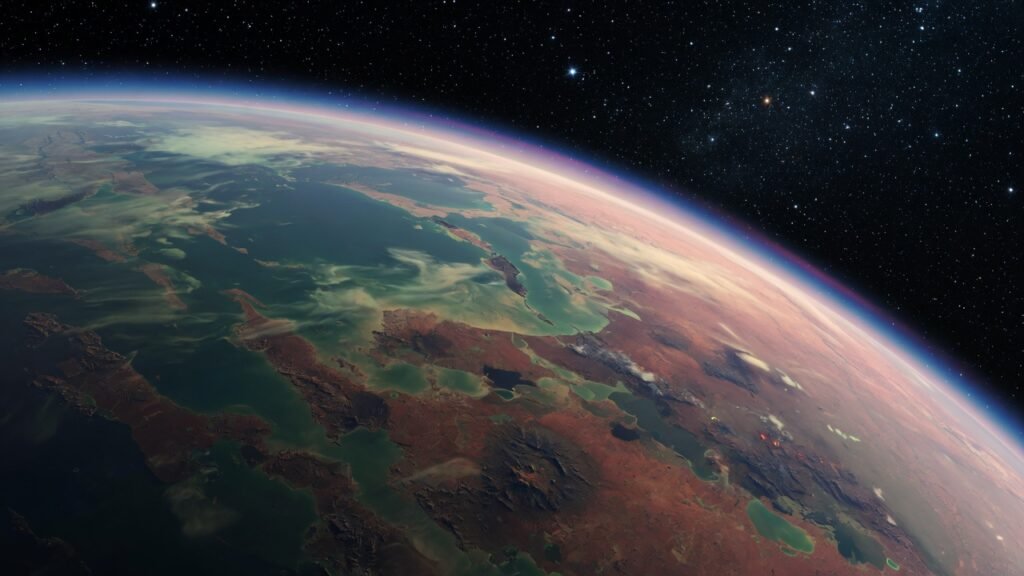
Ross 128 b circles a serene red dwarf M-type star just 11 light-years distant, with a radius of 1.4 × Earth and mass suggesting rocky composition. It orbits every 9.9 days at 0.049 AU, within the habitable zone where liquid water could persist. The host’s unusually low flare activity enhances atmospheric retention prospects compared to […]
Kepler-62 f
Kepler-62 f circles an orange dwarf K-type star 1200 light-years distant, with a radius of 1.4 × Earth. It completes an orbit every 267 days at 0.72 AU, residing in the habitable zone for liquid water possibilities. As part of a five-planet system, its rocky nature and temperate conditions make it a benchmark for Earth-like […]
TRAPPIST-1 e
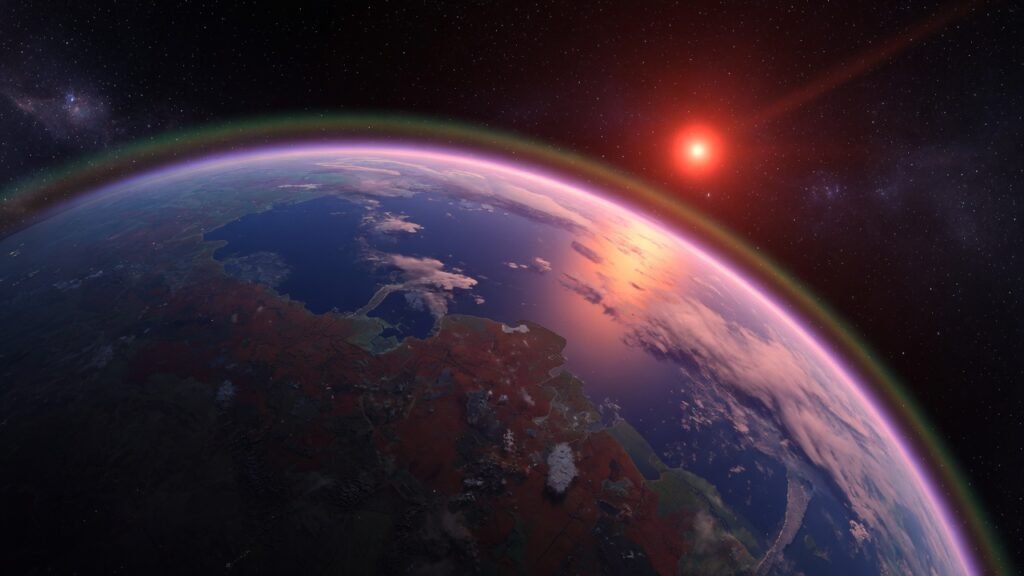
TRAPPIST-1 e is one of seven roughly Earth-sized planets orbiting an ultra-cool red dwarf M-type star 40 light-years from Earth. With a radius of 0.9 × Earth, it completes an orbit every 6.1 days at 0.029 AU in the habitable zone’s heart. Resonant orbits and low stellar flux support potential rocky surfaces with atmospheres and […]