
GJ 3378 b
TOI-4311 b
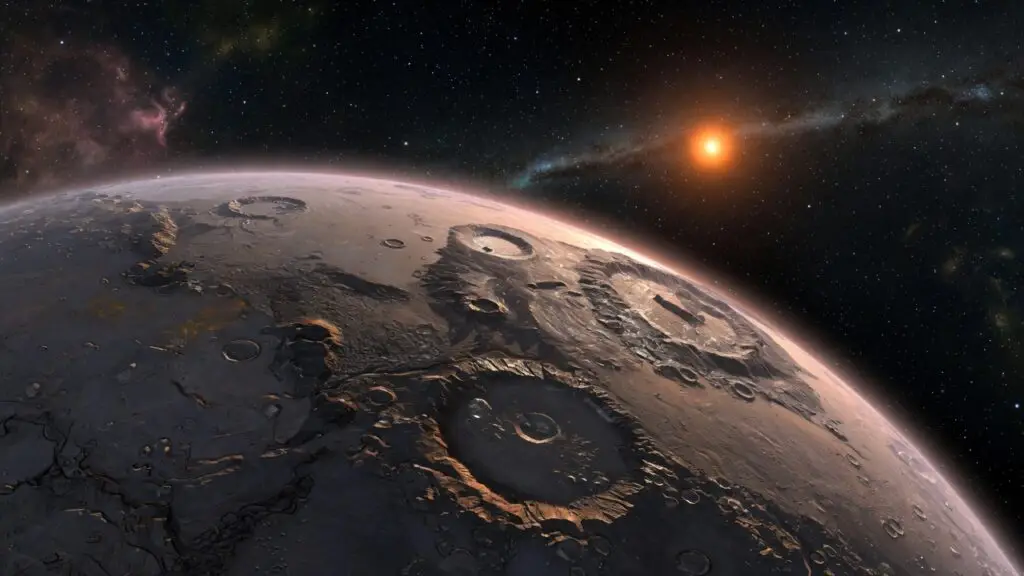
TOI-4311 b resides forever in the codex as a dense super-Earth of notable rocky character, closely orbiting a stable K-type star alongside a longer-period companion. Its robust mass and radius affirm a composition rich in silicates and metals, forged under intense proximity that tests planetary fortitude. In this harmonious system, the planet exemplifies efficient formation […]
TOI-201 d
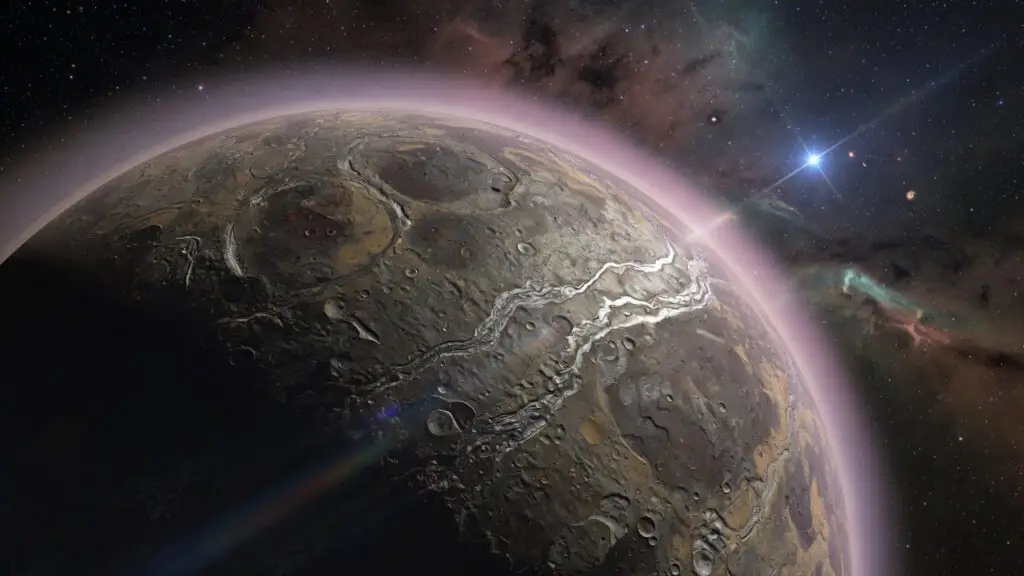
TOI-201 d stands as a steadfast super-Earth in the grand archive of the universe, a dense world of rocky might orbiting a bright F-type star within a dynamically vibrant multi-planet system. Its solid composition and measured heft paint it as a resilient body shaped by intense stellar forces and sibling interactions, offering a timeless window […]
TOI-4552 b
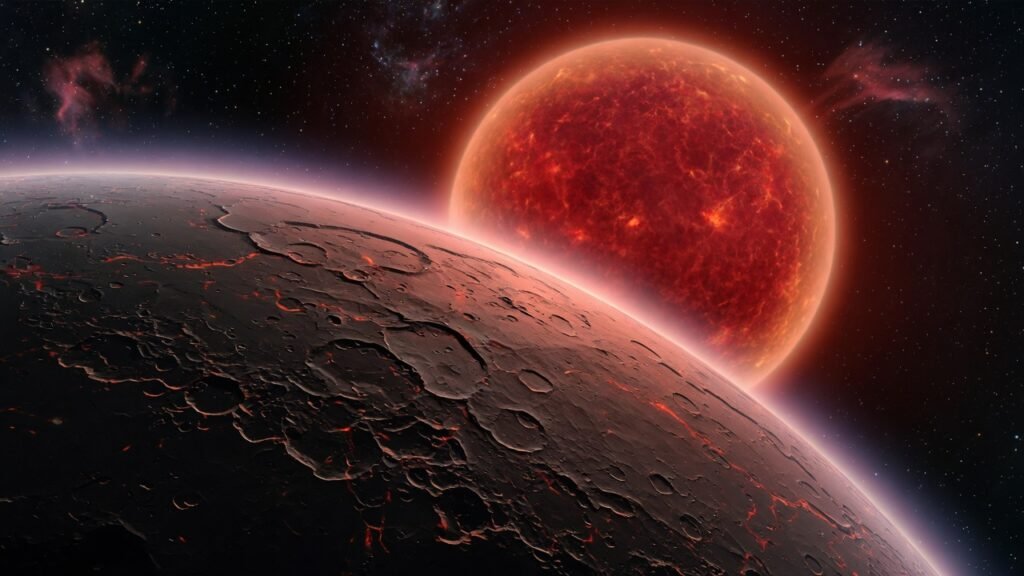
TOI-4552 b is a diminutive Earth-sized world hugging an M-type red dwarf star in an ultra-tight orbit. Measuring 1.1 times Earth’s radius and nearly twice its mass, it reveals a sturdy rocky composition sculpted by intense stellar forces. Its blistering 1122 K temperature paints a picture of a lava-covered realm where days and nights blur […]
TOI-2431 b
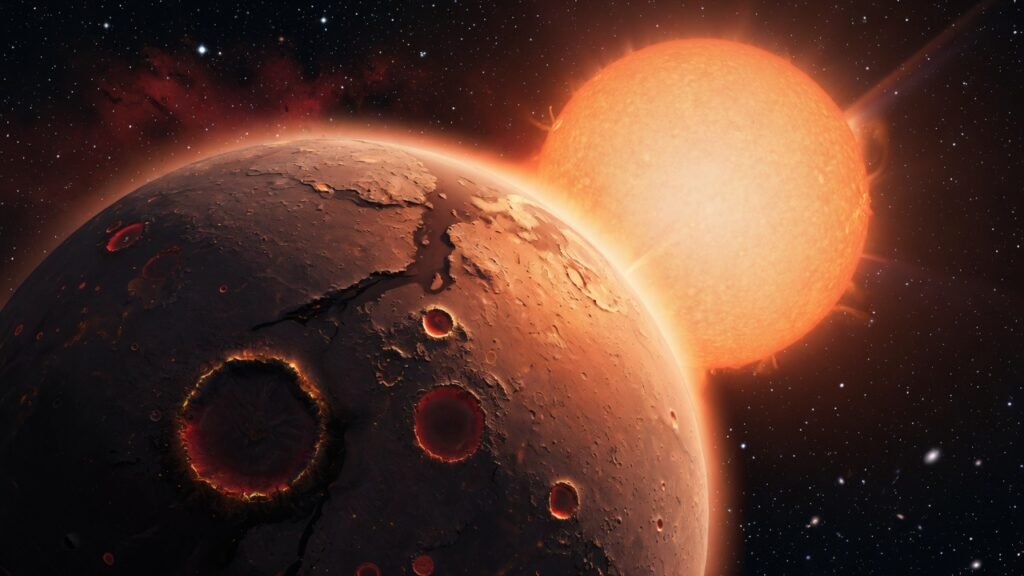
TOI-2431 b is a compact rocky super-Earth orbiting a nearby K-type dwarf star in one of the shortest journeys known. With a radius 1.5 times Earth’s and a mass 6.2 times greater, it boasts a dense, iron-rich makeup that speaks of violent formation near its star. Blasted by intense radiation into a molten surface, this […]
TOI-4552 b
Amid the stellar multitudes, TOI-4552 b manifests as a dense, Earth-sized orb with a radius of 1.1 times Earth’s, suggesting an iron-rich core that lends it exceptional density. Situated 89 light-years distant, the planet completes its orbit around a tranquil red dwarf in a mere 0.3 days, subjecting it to extreme heat and radiation that […]
TOI-1080 b
In the endless expanse of the universe, TOI-1080 b endures as a rocky planet of Earth-like proportions, boasting a radius 1.2 times that of our home world. Located 83 light-years away, it revolves around its red dwarf host star every 3.97 days at a proximity that bathes it in intense stellar energy, yielding surface temperatures […]
TOI-715 b
TOI-715 b orbits a quiet red dwarf M-type star 137 light-years from Earth, sized 1.6 × Earth. With an orbital period of 19.3 days at 0.11 AU, it sits within the habitable zone, offering prospects for liquid water if an atmosphere persists. TESS transits confirmed its rocky or volatile makeup, making it a prime target […]
TRAPPIST-1 g
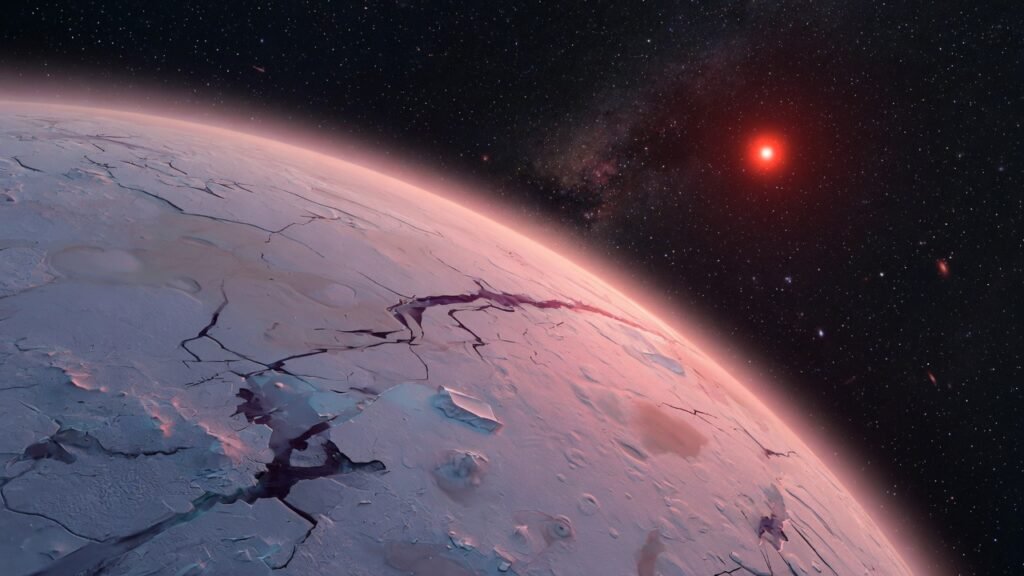
TRAPPIST-1 g is the farthest of seven Earth-sized planets around an ultra-cool red dwarf M-type star 40 light-years away. Measuring 1.1 × Earth in radius, it orbits every 12.4 days at 0.046 AU on the habitable zone’s outer edge. Possible volatile-rich composition hints at icy surfaces or subsurface oceans, with resonant dynamics aiding stability. As […]
TRAPPIST-1 f
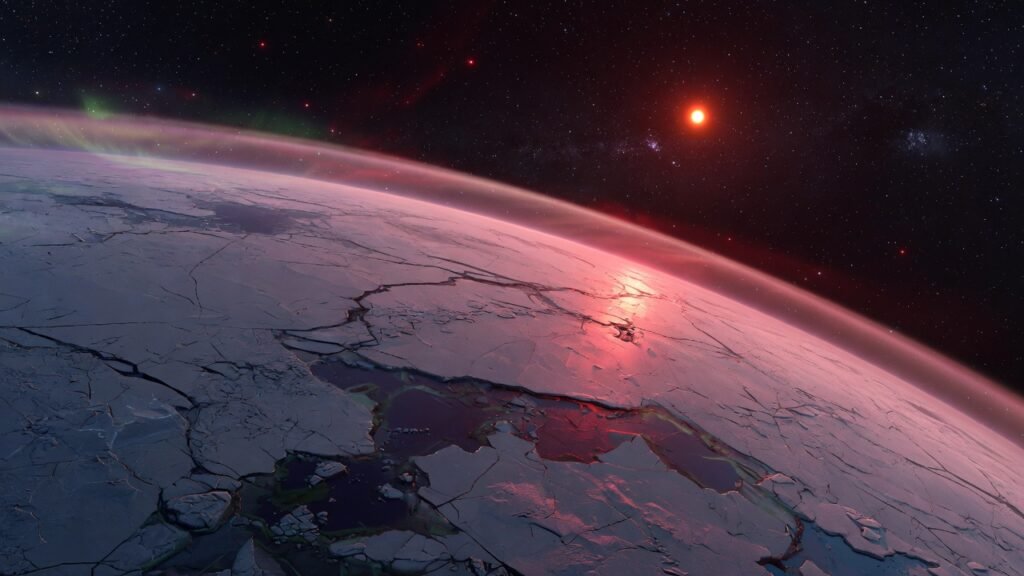
TRAPPIST-1 f orbits an ultra-cool red dwarf M-type star 40 light-years from Earth, as part of a resonant seven-planet system. With a radius of 1.0 × Earth, it circles every 9.2 days at 0.038 AU, placing it in the habitable zone where liquid water could exist beneath potential ice layers. Low stellar flux and tidal […]