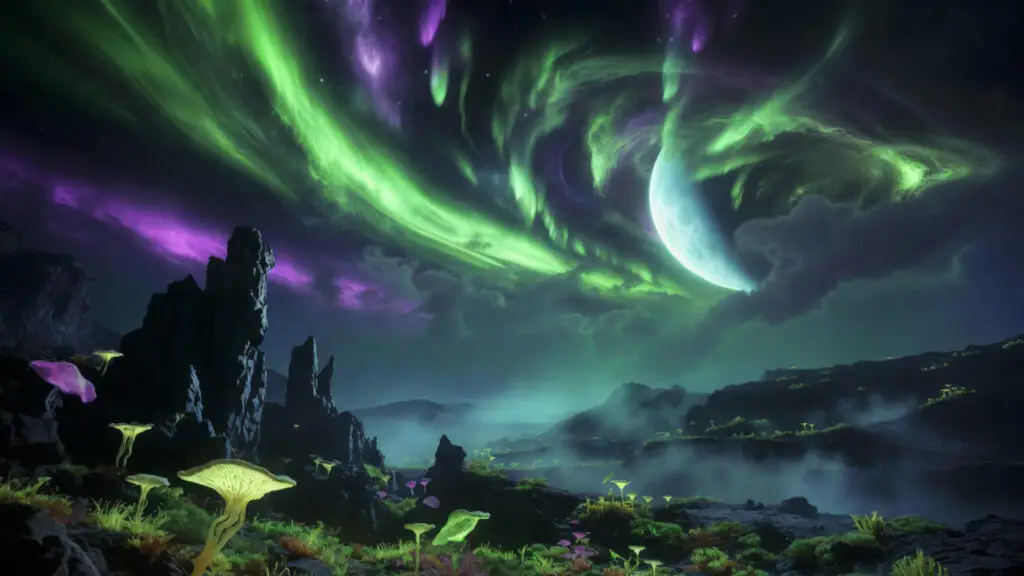
The Goldilocks Worlds
The Habitable zone—sometimes called the “Goldilocks zone”—is the region around a star where temperatures are just right for liquid water to exist on a planet’s surface. Not too hot (water boils away) and not too cold (water freezes solid). Water is the magic ingredient for life as we know it, so these planets are our best shots at finding worlds that could support oceans, clouds, or even alien biology.
Hundreds have been discovered orbiting all kinds of stars, from Sun-like to cool red dwarfs. Some are rocky Earth-sized, others super-Earths or mini-Neptunes. Future telescopes like James Webb could peek at their atmospheres for signs of life. They’re not guaranteed habitable—atmospheres, magnetic fields, and more matter—but they give us hope that Earth isn’t alone in the universe.
- The "just right" distance from a star for liquid water to pool on the surface
- Many rocky planets here could have oceans, rivers, and clouds
- Some orbit red dwarfs with dramatic red sunsets
- Best chances for finding biosignatures (signs of life) in the future
- Over 60 confirmed, with thousands more candidates waiting